Red Planet, With Exit Wounds by Laura Ingram
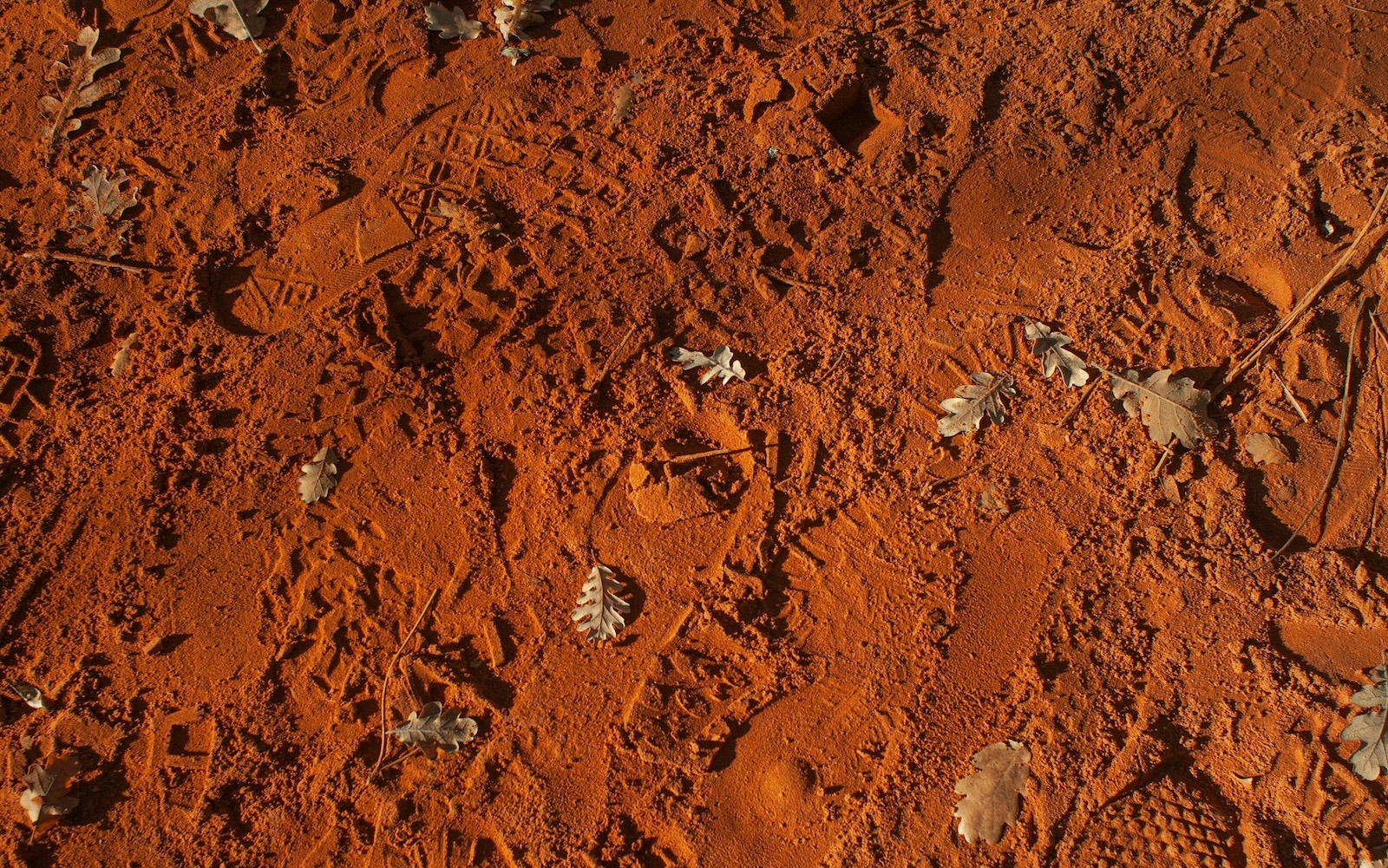
Photo by Egor Myznik via Unsplash
Content warning: This essay contains descriptions of a severe eating disorder.
—
Every year throughout its tenure on Mars, the Curiosity Rover sang itself “Happy Birthday” on August fifth. I told you about it once, in the car, on the way home from the hospital, occasional headlights haloing your hair, one hand hovering over the gearshift, the other covering my bony thigh.
“Isn’t that sad?” I’d asked, picking at the paper tape around the IV site.
“No, Laura. It’s just a robot.” You kept your eyes focused on the road, jaw shifting visibly. You’d dislocated it a lot as a kid, had to wear a retainer for a while. You never told anyone about it but me.
“It’s still sad.” I’d moved your hand off me with mine, rubbing a circle over the callus between your index finger and thumb.
I wanted to be loved, not touched.
***
You carried me up all three flights of stairs to your apartment anyway, set me on the bed, kissed my hands, folded over each other like paper cranes, blue veins floral in the slice of fluorescent from the bathroom door, cracked while you, sleep-deprived, used my Hello Kitty toothbrush by mistake again. I knew you better there, in the dark. Our foreheads pressed together, your hand over my heart, my whispered name repeated, the pledge. Sometimes you kept me like a talisman, hanging around your neck— other times, an oath.
You woke up hours before me for work, knelt by the bed to kiss my forehead.
“Please eat today, sweetheart.” You whispered.
I concentrated on keeping my eyes closed so I didn’t have to answer, breathing in the smell of you from your coveralls, cedar and motor oil. I missed you before you left, missed you even while you lingered in the doorway, wanting to forget the armory keys again, then your wallet that you didn’t really forget. You just kept coming back to get one last look at me until you were late.
***
You call often, always more than once. I let it ring out, careful not to touch even a letter of your name. I don’t breathe or blink until the phone stops seizing in ringtone. You want to know if I am alive. You leave eleven voicemails. I dream that when you left, you left with both of my legs inside your suitcase, kneecaps folded neatly along with your shirts and socks, and now I am waking up with half of me. I relearn how to walk every morning.
I hate you for what you did, and I miss you more than if you were dead.
I suppose I wouldn’t have married me either, a bundle of neuroses and nervosa. After the deployment, you stopped reaching for my hand to hold in public, opting instead to walk one step behind me, hand on my back in case I collapsed.
“I’m fine.” I’d snapped at the Target self-checkout, scanning the strawberry shampoo.
You handed me your credit card. I focused on the security camera, my matchstick limbs blurring with every movement, your pixelated slouch apparent. As tall as you are, your posture has always been terrible.
“You shouldn’t be walking so much.” You said, steering me towards the parking lot, not bothering to wait for the receipt to print. I’d heard it all before, you were just worried, you just wanted what was best. I paused as we reached your car, Blue. I didn’t want to get in. I didn’t want to go home. I didn’t want to stay in town. It all began as the lump in my throat.
“Why don’t you hold my hand anymore? Except when we’re alone?” I picked at some pink lint lining my sweater sleeve. It was more than that. It’s always more than that.
“Look Laura.” You crouched, shrugging out of your flannel and draping it over my skeletal shoulders, blue plaid swallowing my smallness like a tonic.
“It’s just—I don’t want people to get the wrong idea when they see us together. They might think I’m some kind of creep, like a pedophile or something, because they don’t know— and you’re so small—come on, don’t cry.”
“I am OLDER than you.” I sniffled. Only by a year. You gathered me up in your arms. I didn’t mean to flinch. You had told me it hurt your feelings when I flinched.
“I know sweetheart, but people stare at you. I know you don’t understand, but you look like a skeleton or like, fuck, some little kid with cancer. It makes me feel like a creep.”
“Loving me isn’t creepy.” I said, but I already knew you too well. You’d never change your mind. You were right, and I was wrong, every time. Arguing my side only ever made you angry. You never put your hands on me, but every time you raised your voice, I was a little girl again, maybe seven, or even eight, holding my hands over my ears. Any time a man is angry, I am a little girl again, and if I make myself as small as possible, nobody will be able to hurt me.
This is where an eating disorder, as a disease, emerges from. It is, at its core, almost always a defense mechanism.
I know that even now, you see my anorexia as a choice. I told you about the illness soon after we met. It did not surprise you. I should have known. It never surprises anyone. You promised me through every emergency room rush, tangled IV tubing, and failed treatment programs and hospital stays that you would never leave, would never stop loving me, would never blame me for staying sick, as long as I tried to get better.
Believe me, I tried. I tried everything. You sat with me in waiting rooms, heard the specialists explain the biopsychosocial model, how far the research has come in recent years. You took notes as doctor after doctor explained Severe and Enduring, then Severe and Extreme. SEED, SE-AN, ACT, DBT, NGT, AN-R, DNR, all of the acronyms. Some people have a harder time changing than others. You of all people should know that.
In the Target parking lot, you steered me towards the passenger seat, checked to make sure the airbag was still turned off. I found myself thinking of the Mars Rover again, rolling over the endless red planet, never once coming across the water it was sent to search for. Curled like a comma splice so close to your one-handed grip on the steering wheel, eyes stinging as I tried not to cry again—you hated it when I cried— I felt a loneliness just like the Rover’s. After all, you had made me into an alien, and even so, I drank your acid and remained, static and robotic, within your everlasting orbit.
***
Without you, I spend most of most days in the bath, wincing at my bones pressing into the ceramic of the tub, pins and needles almost numbing me beyond the ability to turn the tap for more hot water. When I finally drain the soapy dregs, iridescent in the frosted window’s warp of dusk, I emerge, pruned and mute, as if from the womb, deliver myself as if I’ve just been born. Today, I am my own daughter. I cry in the mirror, startled at the sound, naked and dripping and emaciated. I shiver. I couldn’t stop shivering. I used to joke how much I would love to be reincarnated as your coat. Now, with painful earnesty, slick as a foal, I imagine myself covered with the afterbirth of this infant grief, circling nirvana as I come back to reality over and over as someone new, someone cerebral as a star, this body too many light-years away for you to have ever touched.
You told me the night that you left that I was not even a person anymore, just anorexia. You told me that you were my only chance of maybe having a decent life, because you were at least willing to deal with me. You told me maybe we could just be friends, and you’d take care of me until I got hospitalized again. You told me you would do no such thing. You told me, immediately after, that you’d stay by my side forever. Standing taller than nightmare and bad dream combined in the lavender dim of my childhood bedroom, you slammed your fist into the wall. I startled, collapsed at your feet, flinched when you reached for my wrist to prevent me from falling.
“Stop crying, goddamnit Laura, that’s all you ever do.”
You sank down to the shampooed pink carpet beside me. Silently, I recited the shortest scripture in the Bible, over and over: Jesus Wept. You tried to pull my bones into your lap. I was beautiful, you know, before you told me, and after you stopped telling me.
“Shit” you said. “Shit.”
“Leave.” I said. I’ve always been the kind of person who leaves claw marks in everything I ever let go of. I am anxious, soft-spoken, often trembling. I didn’t know how I’d just spit the word out like a tooth in the sink, bloody and rattling.
“You don’t mean that Laura—” “Leave.”
You left your cowboy hat here. You called, headed towards the highway. You begged to come back.
The only answer I could give was go.
***
Without you, it gets dark out earlier, before the mailman even stacks the letters on the stoop. Maybe it’s just December. The memory of you is a pocket knife I never leave home without. I keep my cold fingers wrapped around the handle, mother of pearl. Our first summer together, measured in miles per hour, we rode back and forth between honeysuckle and sea foam. You built me a blanket fort with fairy lights, took me to tour the art museum, bought me whatever books I wanted at Barnes and Noble. When I asked you to take me to the beach, you booked a trip, even though you told me you hated the Ocean, being in the Navy, growing up in the Mojave. You were a junkyard child, corrosive and bright as the crooked canyons. While your mom served her ten years hard time, heat lightning raised you. You never quite got your fill of rainwater. Whenever your ship sailed out to sea, you’d call me on the payphone only the armorers had access to. You never got more than five minutes to talk to me at most, so it was always the same.
“I love you, you’re my little Laura. You always will be.”
We never made it to the beach, not our first summer, not our second. One July day you came home to me seizing, foaming at the mouth on your bedroom floor. Hypoglycemic crisis. When I woke up in the hospital, I let you cry, pretending I hadn’t come around yet until you were ready, eyes red rimmed, two fingers on my pulse.
“My little Laura.”
***
Without you, I drop below fifty pounds. I don’t speak, not to anyone for at least six weeks. I stop eating. I stop reading. I watch Desperate Housewives, sometimes, when I can focus my eyes for long enough. My friends send stuffed animals, cards. My grandmother comes over and brushes my hair for me, slow with her arthritic hands. I let her touch me. I do not flinch. You keep calling, texting, only ever asking if I am alive. When I refuse to answer, you send a wellness check to my house from two-thousand miles away, back west. I tell the police and paramedics, voice hoarse, that I am alive. They do not seem to believe me, offer me a ride to the hospital. I say no.
Without you, I am no longer lonely. I sleep at odd hours, all hours. I spread the blackness of my sorrow over me like a blanket, and I dream that I never see you again. I do not cry when I wake up.
Even if I see you again, I will never see you again.
 Laura Ingram is the poet and author of six books; Junior Citizen’s Discount, The Ghost Gospels, Mirabilis, The Taffeta Parable, Animal Sentinel, and The Solitude of the Female Preying Mantis. Laura lives and writes in rural Virginia. She enjoys most books and all cats.