Writer’s Womb by Anna Davis-Abel
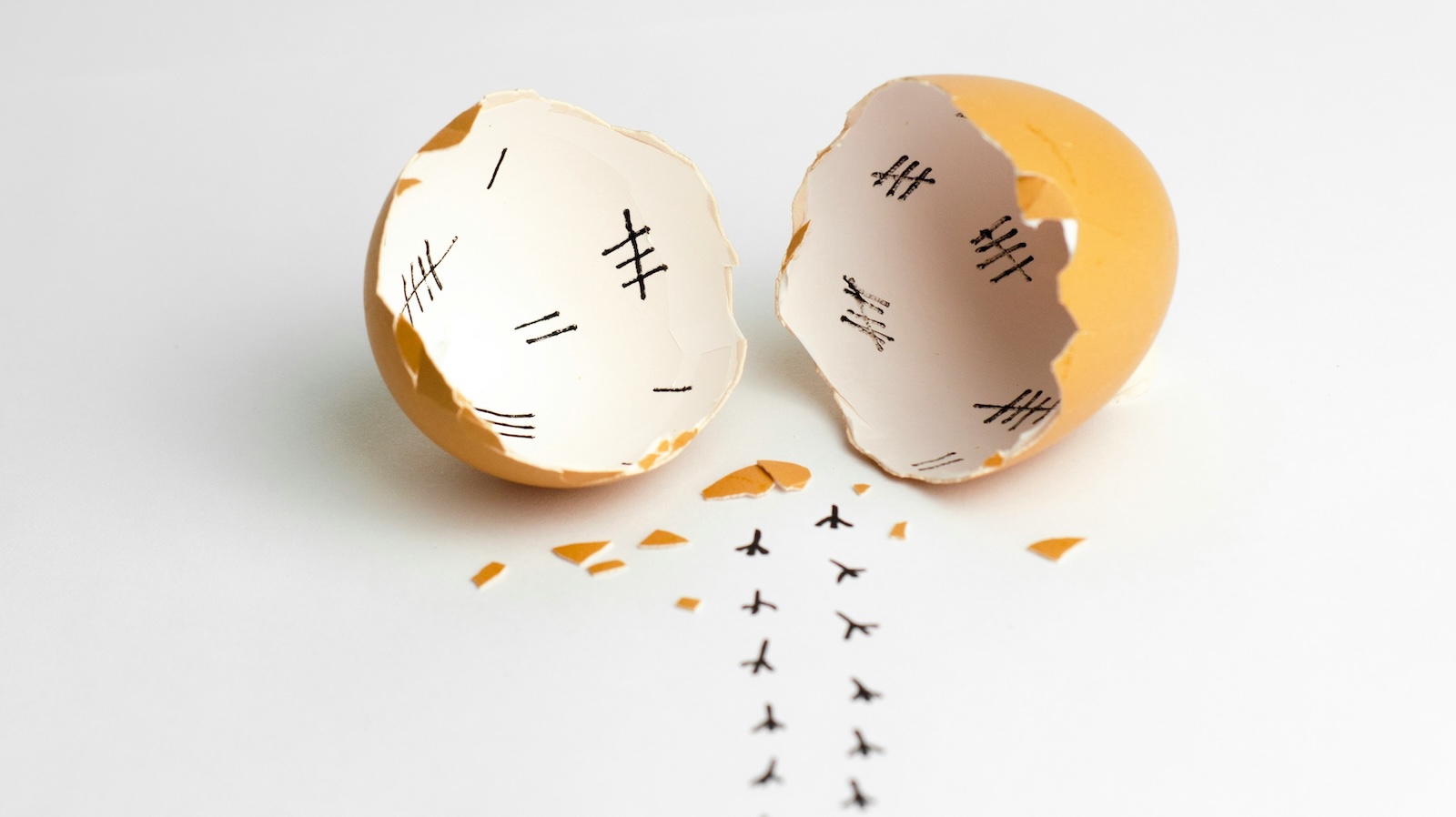
I want to get pregnant. My body will not let me.
I’ve attempted to write this essay a half dozen times. With each attempt, I complicate the simple truth contained in those two sentences. They’re two declarative statements with an ocean of pain between them. I keep trying to write them into something softer. Something with edges I can hold instead of ones that cut. And yet, again and again I find myself staring at a blank screen, certain this attempt is the one that will take.
When I was in the fourth grade, in one of those trailer-classrooms in the heart of Alabama, my teacher gave us a project that stands out in my memory. My teacher – a twenty-something blonde with red lipstick and dimples – stood at the front of the small room and asked, What do you want to be when you grow up?
My classmates chose the familiar archetypes: actors, police officers, musicians. There was likely an odd ball who shouted, A dinosaur! to a swarm of giggles. But I remember raising my hand and asking, “Does being a mom count?”
This was the Bible Belt in the early 2000s. My teacher would go on to get pregnant the following year, quitting teaching to raise her kids. So even as my peers laughed, she pressed a manicured hand to her sternum and answered adamantly, Yes. Being a mother is the most important job of all.
Even then, years before my first period and a decade before I was brave enough to admit I wanted to write for real, I knew the weight of what I wanted: to create, to nurture life of my own making. In that haze of childhood, motherhood felt inevitable. It wasn’t something to strive for; only something to arrive at. Like language itself. Like the body knowing what to do without being asked.
I did not yet understand that wanting and having are separate verbs. Or that the difference between them would start with me, with this body I inhabit.
*
Writers are people defined by a neurotic need to add. For us, there are no secrets, no unmentionables, no depths we aren’t willing to plumb for new understanding. We circle absence until it takes shape. We name what hurts and call that meaning.
Because I published my first essay at 19, I never considered that the stories could one day leave me. Empty. Barren. Blank. I was familiar with my writing cycle: the incubation of an idea, the nurturing as it developed draft by draft, then finally birthing it into another line of my CV. Every time a new piece came out, people asked me the same questions: Aren’t you afraid of what your family will think? Are you uncomfortable with those words out there for anyone to read?
And truthfully, my answer has always been no. This is the life I wanted. To turn experience into language. To take what is private and make it shared. To make what happened to me matter.
At sixteen, I laid in my bed, striped by the grey light leaking through my blinds. Eyes prickling with fatigue, I stared at my cellphone, waiting for texts from my first boyfriend. He was older – too old, truthfully, having graduated when I was still in middle school – but I wouldn’t listen when people told me to cut him loose. I know what I want, I’d told them. The truth was that the boyfriend made me feel seen in ways my addiction-riddled family couldn’t. He’d listen to my ramblings of the stories I wanted to write and say, “You’ve got such an imagination.”
I didn’t know then that words could mean two things, that the compliment I heard in his voice was, to him, a silent dismissal. That lesson would come later. My body would teach it to me.
*
By definition, infertility is a state of absence. The word itself is a paradox: a noun of abundance undone by a prefix of negation. I say it aloud sometimes, testing its weight. Infertility. Infertility. In – fer – til- i – ty. As if repetition might dull it, might make it something clinical instead of something that lives under my sternum, pressing down like a typewriter on my chest.
It doesn’t work. Instead, it reminds me of the cruelest kind of truth: that by trying to create life, I’ve never felt more alone. Words have betrayed me.
Because no one knows what to say to a woman whose womb is a war zone. I arm myself with the admission, bracing for the awkward blowback each acknowledgment brings. It feels like confessing to a crime. I’m going through infertility. I robbed a bank. I’m one pitying look from setting this building on fire.
The conversation fractures in predictable ways. Some people go quiet, their mouths sealing shut like my fallopian tubes. Others reach for optimism, patting my shoulder like an infant. It’ll happen, they assure. Just keep trying. Somehow these are harder. They leave me feeling like I’m biting my tongue to blood and swallowing down the heat.
Then there are the busy bodies – the old southern women with red lipstick and hairsprayed bobs. They ask things even friends wouldn’t dare – What positions have I tried in bed? Do I think it’s because my husband has been unfaithful? Am I aroused enough in the moment? You know, because swimmers need water to race.
I laugh more than I expect to. It’s either that or start screaming.
The people I dread the most are the ones who want to fix me. They offer “remedies” in the form of herbs, diets, and multi-level marketing supplements. They suggest their snake oils with leading questions. What toxins might I be ingesting, what behaviors did I poison myself with?
It is a particular kind of cruelty, to be handed possibility in the form of blame. And worse, to recognize the voice of your own thoughts in someone else’s certainty. Because I’ve asked myself all the same questions.
Like stones in my mouth, I’ve turned over every possibility searching for the words to explain why it’s my body that can’t create. Was it the years of birth control, the protracted em-dash of time I wanted to suspend – but not negate – motherhood? Should I have known better than to get the shot the doctors said was needed but others said was a gamble? Did I delete my own potential, eating things that made me happy rather than healthy?
I know these dark thoughts are just my way of trying to own the narrative, to recast something unknowable into something controllable. Part of me wonders if that isn’t also motherhood. Accepting fault for things that have no blame? Taking the problems of the world into our wombs? To make them less terrifying. To make them human.
I don’t know, and the writer, the woman, the mother in me is terrified of that uncertainty. All I do know is that I want to look my friends in the eye when they tell me they’re pregnant and not fear they see the maelstrom of emotions inside me.
I want to go to restaurants where infants sit in booster seats and not ache with a near-emptiness under my sternum (otherwise occupied by the cloying sound of in – fer – til- i – ty).
I want to live my life beyond calendars segmented into hormonal phases and days defined by held breaths in bathroom stalls.
The failed procedures.
The mountains of needle caps.
The look in my husband’s eyes when I put another box of tampons in the shopping cart.
They’re scenes from a novel I never wanted to write and yet each new chapter drags me deeper into this inescapable plot.
But what can I do? What other story can I tell?
*
I see a specialist at the best research hospital in my state, and he tries to reassure me that I am not broken. Of my five doctors, he is the only man. That’s a deliberate choice on my part. Since growing into a woman, I’ve tried hard to surround myself with capable women, with voices that feel like mirrors instead of translations.
Yet, I’ve been assured this doctor is the best at what he does. And if I’m telling it true, I have to admit that he is. He’s thorough; he asks questions. Even still, it’s difficult to look him in the eye as he reads the Sparknotes of my body.
To see a lifetime of living condensed to neat rows labeled Comorbidities is somehow silencing. Entire years are reduced to diagnostic codes. The nights spent bent over porcelain bowls, vomiting dinner while my thoughts circled like water down the drain is now, simply, F50.2. The years I spent begging doctors to take me seriously while feeling my mind unravel, my body swell, my joints set fire become M32.1. The codes stack like verses in a stanza. F42.2, E66.811, N97.1. They’re bits of data that hide the deeper truth: my body is an experience collector, a walking monument to a life lived. But beneath the diagnostic criteria and evaluative data is me, a person, a woman who wants.
Reading that list, I start to fear that my body is too damaged to create life. What if it remembers all the sins I’ve fed it and has stored them away like scar tissue? Can the body extract marrow from memories and build muscle from guilt? I’m scared that all those times I was stronger for having survived, I was really thickening myself against invasion, against implantation. To be a mother is to send your heart outside of your body, yet I’ve made mine a fortress without doors.
These are the poetic ruminations that make my therapist’s lips thin before she tells me I’m too in my head. She tucks her feet under her folded legs and passes me a rubber ball to squeeze. “Keep your hands busy so your mind can slow,” she says. And even as I close my mouth, inside I’m screaming.
Because I don’t know where else to live other than in these spiraling thoughts where I’ve built my career. In all other parts of my life, I’ve made sense of existence through writing. I’ve published about everything: my family, my marriage, the bodies I’ve loved, the versions of myself I’ve shed. I never felt like I had all the answers, but I knew I could find them if I only gave myself the space to write, the room to create.
Yet, here I am. Trying, over and over again, for a child. Returning, over and over again, to a blank page.
I’m not ready yet to put a period on this chapter, despite each new menses. Some may say it’s foolish to look for a new ending to the same story, and on my dark days, I’m tempted to agree with them. But because I am a writer, I also want to believe in the power of retelling, of how a story can take on a life of its own once it breathes outside of us. Reality is only the sum of the words we write, and so each month, I try to write it again.
Maybe this time, I’ll get to finish.
 Anna Davis-Abel an Alabama native currently teaching at the University of Alabama in the Creative Writing Department. Her work spans from speculative genre fiction to lyric nonfiction and touches all the nooks and crannies in between. For more information on Anna or to read her publicly available work, visit her website at AnnaDavisAbel.com.