Hunger by Carmela Lanza
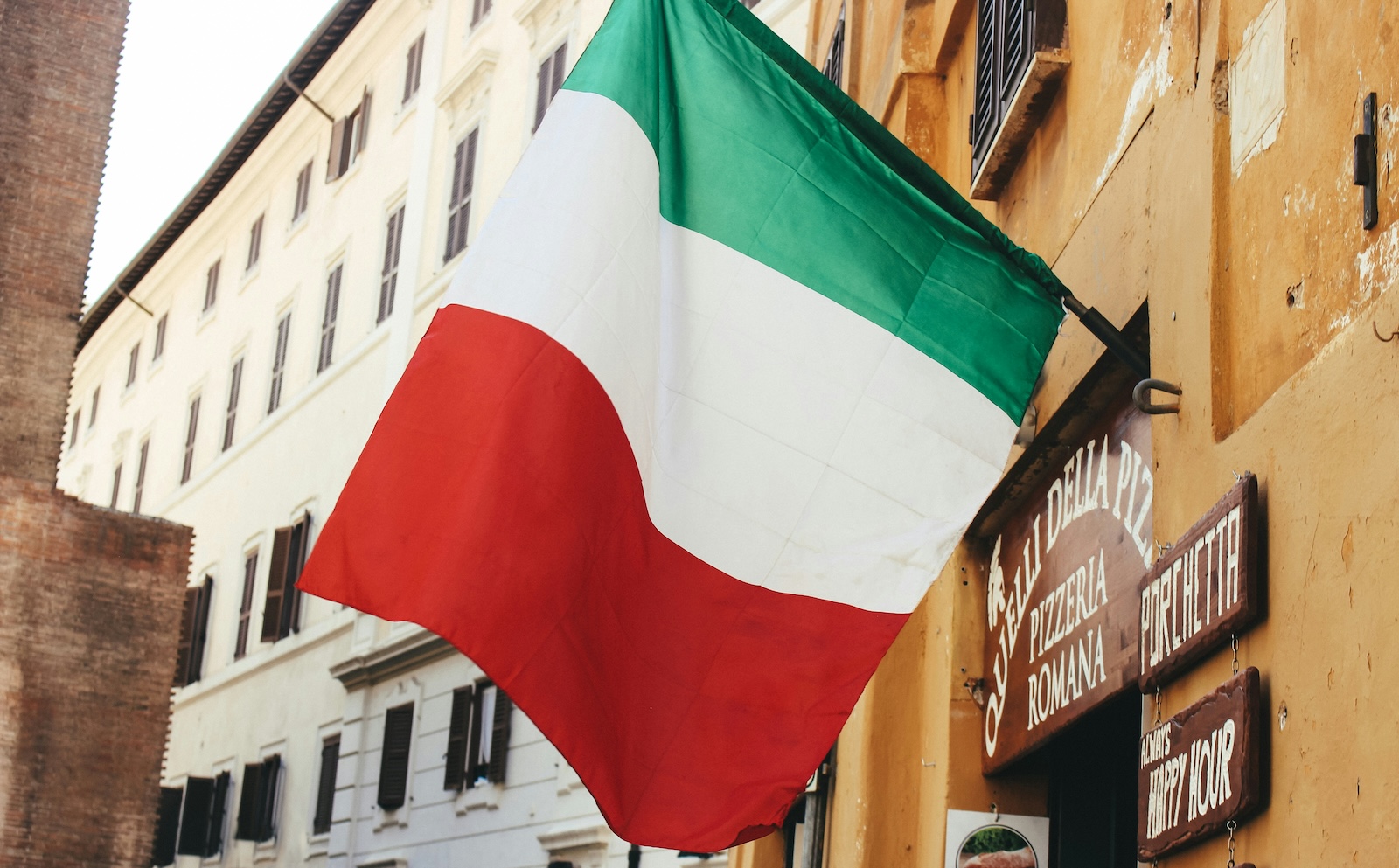
Photo by Jametlene Reskp on Unsplash
my name . . .
Somewhere between there and here, I land, not exactly on solid ground but on an island, and I cried for months after my birth. I hang on like an afterthought or a comma in the middle of an unfinished sentence. I appear, a girl, but my mother, so sure I was to be a boy, had already named me “John.” Instead I became “Carmela Delia,” but that was “too long” for such a tiny baby girl. So I became “Milly.” Years later I made a simple request—“Call me by my real name,” but I would hear a slight hesitation, a slight pause. A discomfort having to call me “Carmela.” Was I, finally Carmela, really in this world?
my short, round, hairy body . . .
I am not even a teenager, and I am sitting in the car with my mother. We are in front of one of the supermarkets that have appeared in a sprawling, suburban Long Island town. I don’t remember why we are sitting there waiting. Maybe my dad needed to go to the bank. I don’t know. I do remember that I asked my mother why I had hair on my arms, and she said, “That means you strong.” It sounded like a fact to me so I accepted it. Eventually I stopped believing that my hairy arms or my round stomach had anything to do with beauty or strength.
In my teens I started looking at my mother and my aunts, and all I saw were short, round women who gained a lot of weight after they had children, and that was it. They became mothers, and they worked at that. For them, being a desirable wife was like a joke; you were making a fool of yourself if you put on a lot of make-up and tried to flirt with your husband. It was ridiculous. Your job was to be a mother.
In her book, Bodies, psychotherapist Susie Orbach claims, “Every gesture we make, the very way we move, our grace or lack of it, our physical confidence or unease, reflects both the country and local culture we have grown up in…“ But what happens to a daughter of immigrants who does not belong in any country? We lived in a country that for some was the greatest country in the world—America. But in my family, we were in conflict with that country. My mother crying about losing her homeland, losing everything, and my father agreeing that nothing was quite right in this place. That even the store bread was disgusting.
Orbach goes on to say that beyond what each of us physically experiences growing up, our bodies are also included in the “cultural body story, which both parents and children live through.” What was my “cultural body story”? I remember sitting at the table and being told I shouldn’t eat too much because then I would always be fat. I felt ashamed that I had reached for more food, and someone was warning me that if I did not change my ways, I would not be desirable. No man would want you, so you better be careful. After all, throughout my childhood, I noticed that my mother and my aunts did not look like those alluring, beautiful Italian women—Sophia Loren, Gina Lollobrigida, or Monica Vitti—with their flat stomachs, sensuous full lips, and no mustaches. My mother’s lips were so thin I could barely see the lipstick on them.
In my family, all I saw were short, round women who were comfortable as mothers but resistant to being desired. All of my mother’s sisters and my mother had round stomachs. One of my aunts (a daughter-in-law) was thin, and she was known as the “skinny one,” una scoba—a broom.
None of my aunts married American men except for my mother. And for the women in my family, marriage was about having financial security. It was about work. My mother modeled hard work and self-sacrifice, not how to properly use beauty products. I was never taught how to use my feminine beauty as a source of power or manipulation. I was taught that if I worked hard, I would find a decent husband and have a good life. If any of the women in the family made too much of a fuss about their hair, make-up, or clothes, they were seen as behaving like an American, una medigan—someone pretending to be American, someone who has forgotten her identity as an Italian.
What happens to the Italian woman who becomes the Italian American woman? In popular culture, the Italian woman is the “sex bomb.” The Italian American woman is the caricature. She is Snookie on “Jersey Shore,” Carmela on “The Sopranos,” Ray’s mother on “Everybody Loves Raymond,” Camille Paglia, Madonna, the women on “Mob Wives.” Loud, tacky, campy, unsophisticated, a doormat, a joke.
When I visit Italy I realize I am not an Italian woman. I compare myself to Italian women and am always lacking—no manicured nails, too hairy, too much body fat, sweating, stumbling through the language. “Please, signora, speak English.”
From beauty, art, imagination, vision, invention to caricatures—men with gold necklaces, women with mustaches, overweight children shoveling spaghetti into their mouths, napkins tucked in their shirts like adult bibs. No matter what we did, we were perceived as the workers for others. My aunts and uncles were the gardeners, the housekeepers, the beauticians, the dishwashers. I doubted I would find any power in my physical looks—a short, chubby, dark girl who never felt American or Italian.
The hair I now have on my body has been slowly thinning and disappearing. Now I realize the hair I had did give me some power. “Here I am, like it or not.” The hairy arms, the thick, black eyebrows, the hair that was able to grow beyond my shoulders, curly, feathery. All of that gone. All I have left are the words I brought into the world. “Here I am, like it or not.”
my voice is my name . . .
I become a poet. How long has it taken me to write that sentence? But even after all these years, I struggle with saying the words, “I’m a poet.” I spend most of my time running around in circles, taking care of others, sacrificing, and then it is time for bed, and I have no idea what happened to the day. I lose it all. Another day gone by and my folders sit, unopened, silent. Neglect all around. When I go through my notebooks with a line here or there or even a short paragraph, I almost remember what I was feeling that day. Almost but not quite.
As the last child, and a definitely unwanted child, I was usually told to be quiet, to shut-up, to not ask for anything or demand anything. I was often the witness to whatever my mother was feeling, to what my father was declaring, and to all the drama of my half-siblings. No one told me I had anything worth saying.
It’s fourth grade, and I sit during math time and worry about failing. I rarely understand the teacher. Other students shoot up their hands before she even finishes the question. I am lost. My mother comes to the science fair that year. It is at night, and she is tired from a long day of cleaning the house. She looks at my crayon drawing of a heart, and she says to me in Italian, “For this I came all the way over here?”
I start writing. I keep a diary, and I write my first poem from a list of spelling words. The librarian read my poem to the class. My writing is what sets me apart from all the workers in my family. I tell myself that I will do more; that I will become more than a housekeeper, a secretary, or a beautician. At the time I do not know I will miss them all. I do not know that as a writer, I can bring back the dead for a moment. That I would rather spend my time in this world than what is out there. That I will be alone because of my choice.
When I sit with a group of women artists and writers, I try to speak but I am choking with a dry mouth, and someone says she can’t hear me and would I please look at her. I am not making eye contact. I am trying to get out the words that are rushing around in my mind, but I can’t. When I first write a poem it sounds like a child talking. The intimidating, poetic words are not there. And so, I do what my ancestors did, what my parents and relatives did, I go to work. I am right there with them, struggling for every word, surviving. My voice is strong in a classroom when I am teaching, and it was strong as a mother, but as an Italian American poet? Someone told me that my poetry is full of hunger. Does that mean my voice can finally be heard?
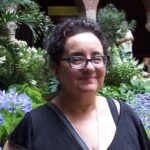 Carmela Delia Lanza is a poet and professor of English. Her recent book of poetry, Atterrando, has been published by Epigraph Books. Her writings have appeared in numerous journals and anthologies including New Mexico Poetry Anthology, Comparative Woman, and Ovunque Siamo. She lives in Albuquerque, New Mexico.