
Performance by Carolyn McGrath
The older nurse came in, the nice one with reddish hair in short curls and glasses on a chain around her neck. The name tag on her petal pink uniform read “Ruby” and a hint of brogue enriched her speech.
“Your daughter has just called,” she said, addressing Alice but crossing to Ted’s bed and pulling back the sheet that covered him. “She calls every evening to ask about her father.”
“Did you tell her I was here?” Alice asked from her chair near the window.
“Yes. She was surprised.” She spoke without a hint of judgment, her fingers on his wrist now.
“Shocked, was she? Wouldn’t speak to me?”
“I’m sorry.” The nurse’s voice had compassion in it.
“Don’t worry about it. We seldom speak. She’s closer to her father.”
“You’re separated? We can turn him now. Take the other side and we’ll roll him just slightly toward the window, toward you.”
Alice rose and found the opposite corners of the sheet under Ted’s body. “What do I do?”
“Just lift a little and we’ll position him on different pressure points. That’s it. See how the blood tends to pool where his weight rests?”
“What weight?” Alice asked. Ted’s body was emaciated, his bones in sharp relief, his color that of a grub under an overturned rock. The blue hospital gown barely reached his thighs and was open in the back. Alice could see a diaper fastened around his lower body. He’d been a strong and vital anthropologist.
“I know,” said the nurse with her caressing voice. “He’s wasting away. It must be a shock if you haven’t seen him for a while.” She was working a pillow under his calves so that his heels wouldn’t touch the bed, showing Alice the blood that had pooled under the skin, threatening bed sores.
“Can he hear us?” Alice asked, staring at the gray eyes aimed straight ahead without a sign of recognition or response. His breathing was quiet in contrast to the sounds coming from the patient on a respirator behind the curtain on the other side of the room.
“I don’t know for sure, of course, but I like to hope he can. Can you hear us, love?” Ruby bent closer and smoothed back his colorless hair, her other hand cupping his head as though he were a baby. Her intimacy with Ted’s body reached deeply into Alice and moved her, whether with guilt or pity she wasn’t sure. Ted’s head turned slightly in the direction of Ruby’s voice. “Ye-e-es,” Ruby crooned, stroking his head. “We’re here. We’re with you.”
“Is he in pain?” Alice asked.
“No, I don’t think so,” Ruby said, not taking her eyes off Ted’s face. “Just when he tries to swallow,” she said, her voice still crooning. “It’s been so long since he could eat. His system is shutting down.”
She smoothed his hair one last time, pulled up the top sheet, then reached for a plastic-wrapped sponge swab on a stick. “These have a little glycerin for coating the lips and tongue when you want to moisten them,” she said, removing the plastic and drawing the swab along his lips. When he parted them, she inserted it to stroke his tongue and the inside of his mouth, but he sucked on it, trying to swallow, rolling his head from side to side. “Yes, I know, sweetheart. You’re thirsty,” she said, pulling the swab out and filling an eye dropper with water from a paper cup by the bed.
Handing Alice the dropper, Ruby said, “You can do it. Just drop a little water in the corners of his mouth, like this, and wait until it’s gone. I’ll leave you,” and she turned to open the curtain on the other side of the room. The patient there was a man in a half-sitting position, hooked up to blue plastic tubes and a pump that supplied him with air. It was as though Alice had a sudden glimpse underwater of someone breathing from the deep. She saw his eyes staring straight ahead as Ruby redrew the curtain.
Alice, afraid Ruby would think she was an unkind person and not wanting to lose Ruby’s consoling presence, said quickly, “You asked if we were separated. We were, but it wasn’t what you might think.”
Ruby was busy with the patient. She could be heard soothing him.
“It wasn’t his fault. Or mine,” Alice went on. “It was… a long time ago.” She pinched the bulb end of the dropper and half of its contents fell inside Ted’s left cheek. He tried to swallow but the water wouldn’t go down. The repeated effort produced an odd sound and Ted’s eyes looked wildly concerned. Alice lifted one side of the sheet to turn his body as far as she could to the side and the water dribbled down through the short stubble of hair on his face and onto the pillow. Repositioning him, she picked up the swab and ran it inside his lips.
After a while, Ruby emerged. On her way toward the door she said, “Why don’t you talk to your husband?” nodding toward Ted. “Tell him how you feel now.”
Alice figured this was meant more for her sake than Ted’s. “I was…”
Ruby hesitated, waited for her.
Alice shook her head and said softly, “I was raped. It destroyed my marriage.” It was the first time she’d ever spoken of it, and she was trying to say it now to a complete stranger. And in the presence of Ted. She looked at him but he showed no response. “Not by him,” she clarified. “Of course not.”
“Oh, I’m sorry! When did this happen?” Ruby turned and looked right at her now, her hand on Alice’s forearm, hesitating, her eyes seeming to search in Alice’s own for some truth, some quick means of knowing all about it. Alice felt the change. Now the nurse was interested in her.
But before she could answer, then Ruby apologized. She had to go on to her other patients. The doctors come by early in the mornings. Alice should come back then if she wanted to talk to the doctor on rounds. Alice understood the demands on nurses and was relieved to not have to start on a subject that Ruby would know could take endless time. The strange thing was how anticlimactic it felt to have said what for thirty years she’d concealed, this secret that she’d grown deformed around, like a tree growing around a nail driven into it. But this wasn’t the real secret that she’d revealed. If the attack on her were all that had happened that night, she would have gone to a hospital, called Ted, had the support of others. But it wasn’t.
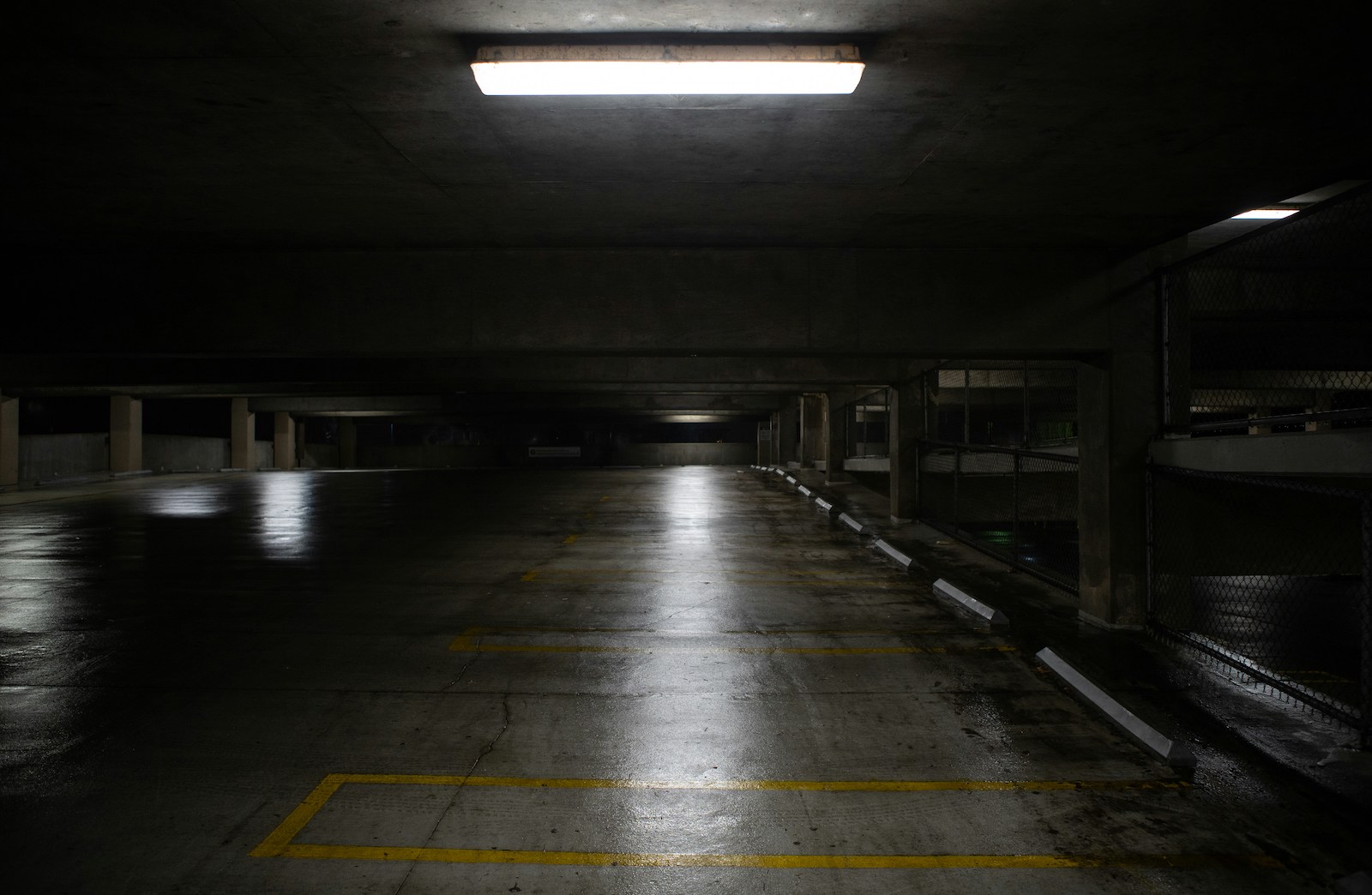
Now, with memory bearing down on her once more, she left Ted’s bedside and sat again in the chair by the window. Outside it was twilight and lights shone in the windows of other buildings. On the other side of the room, the respirator sucked raspingly, just as he had sounded, struggling on the floor of the nearly empty parking garage, a jagged hole in his throat. After all these years of reliving it, she still saw it in motion. She couldn’t even be sure now whether what she remembered was the actual event or the product of her many nightmares. The steady sound of this respirator wasn’t really what he’d sounded like, his hands at his throat, legs scissoring on the floor, his attempts to take in air gurgling through the blood.
She’d wondered all this time at her actions that night, or her inaction as she’d moved out of arm’s reach but remained within sight of him until he stopped moving. And even then she’d waited. Waited to be sure he was dead. How had she found the composure? She’d needed her car key. Her purse was on the floor near the wall and her briefcase. When she finally moved, she’d had to step around the blood, past his large knife to get to them. Then she’d stopped to pick up her pen knife that he’d pulled out of his neck and flung away. She would leave no evidence.
Somehow she’d found where she had dropped her briefcase and located her car, found the keys in her purse, opened the car, started it, wrenched it into gear and squealed up the ramp. What was most amazing to her was that, before she came to the exit booth, she’d taken a scarf from her bag to pull around her neck to hide the bloody places made there by the point of his knife and the blood that showed on her collar. Without a flaw, she’d done everything that made her escape possible. No one had ever connected her with the body in the parking garage. She’d done everything right. Ted was in bed by the time she’d arrived home, due to leave early the following morning for a trip. She’d showered in the guest room, trying to wash it all away. Bagged her clothes and put them in the trash.
She’d believed it would be just a matter of time to recover. A matter of strength of mind. But the pain of his knife still felt just as real all these years later, and her hand went to her neck now, her finger on the scar below her ear where the knife’s point had pressed with each thrust he made into her body. They say we don’t remember pain. It was true that she’d forgotten the pain she’d felt giving birth to her daughter, but the pain inflicted upon her in the parking garage had survived all these years almost reified. And the loathsome things he’d said had made it easier to do what she’d done when he had let his guard down. She was determined to go on with life as though nothing had happened. She couldn’t have the media circus that she knew would accompany the sorting out of all aspects of the… crime. Her crime? She’d known all along that legally her defense was self-defense, but she’d had a concealed weapon on her. Her little penknife. Why else had she opened it and put it in her pocket before leaving the train station? She was a pianist, not a lawyer, but she believed that that would have complicated the issue legally. That would have been a nightmare set on repeat. Not simply that she’d been on the train after a performance in New York, and, fearful of the walk from the station to the parking garage late at night, slipped her penknife into her pocket, fought off an attacker and gone home. She’d killed him and said nothing!
The longer she’d waited, the harder it had been to bring it up. No one, not the police, not Ted, associated her with the events in the parking garage that night. She was sure that Ted, who always played by the rules, would have insisted on reporting it. No, she wouldn’t drag her family into it, and she would not let it destroy her career as a musician. Terrible, yes, but put a box around it. Erase it. Get over it. Pretend it hadn’t happened. That was the decision she’d come to. Later on, when she thought maybe it would have been better to take her chances with the police and the media, she knew she’d compounded the appearance of guilt by running away from it.
Now, with all that memory bearing down on her once more, she sat at the window and watched headlights tracing various routes through the darkness outside. It happened so long ago. Ted, gone for weeks in Peru, hadn’t even read about it. The newspapers had printed a photo of the scene: the victim, a man lying on the floor with his pants open, his neck and chest bloody. A knife on the floor. What would the police assume? Coverage of the man’s death was soon relegated to the back pages, then nothing. But then she stubbornly refused to explain what was going on with her. Had felt herself sinking into a depression. When Ted returned home, she avoided being near him. She learned that sex was an all-important expression of love in her husband’s mind. How could she explain her reluctance?
And now, here she was at Ted’s side so many years later. She stood and looked at his chart. At the top it read, “Do Not Resuscitate.” Now that he had no hope of living fully, without pain, he wanted to die. She should have stamped DNR on her own forehead that night, she thought. She’d known this visit to Ted would bring back old memories, old resentments, old regrets, but she touched the sharp bones of his shins through the sheets, saying softly, “I did love you.”
Maybe their love would have gone on had each of them continued strong, independent, professionally engaged. She didn’t know whether she blamed Ted or not for his inability to cope with what she became. He’d said he wanted to understand and help, but that seemed to mean sending her to talk to others. She suspected that if she’d confided in him, he would have insisted upon going to the police. He always did things by the book. In the end, it was sex that mattered. For him, her unwillingness was an indicator of loss of love for him. For him, love and sex were one and the same.
“Why couldn’t you just have loved me?” she asked him out loud, pulling the sheet up to his chin and stroking his head the way Ruby had. His eyes looked at her uncomprehendingly.
Another nurse came in, this one in blue with a name bar that read “Cassandra,” her head adorned with an impressive number of small braids. She said hello to Alice but busied herself with administering a shot to Ted which, she explained, was morphine, then disappeared behind the curtain to attend to the man on the respirator. When she emerged, headed for the door, she looked Alice’s way and said, “Visiting hours are over.”
“I’d like to stay, if you don’t mind,” Alice said. “I’ve come a long way and have to leave in the morning.”
“Sure. He doesn’t have much longer,” the nurse said, “but don’t feel bad if you leave before it happens. Contrary to popular opinion, dyin’ shouldn’t be a spectator sport.”
“I’ve been dying for a long time and I could have used more company,” said Alice.
The nurse stopped in the doorway and looked back long enough to say, “Dyin’ isn’t the problem, honey. Some people jus’ don’ know how to live” and she disappeared.
When Ruby reentered the room, Alice felt a childlike relief, as though Ruby had the power to sweep dark thoughts away with a shake of the thermometer. This time the nurse merely glanced at Alice as she made her way toward the other patient. “You’re still here,” she observed not unkindly, raising her finger to indicate that she’d continue later. Alice nodded and waited as Ruby entered the world behind the curtain. She hadn’t been there long when Cassandra returned and followed her. Alice could hear them conferring in low tones. Then Cassandra left the room looking neither left or right.
In the glass of the window, Alice could see herself, how old she looked now. Her neck, once lovely, was now looser. She no longer wore raised collars or turtlenecks to cover the scars. She watched the reflections of the room’s comings and goings. In time there were the two women and then a man behind the curtain on the other side of the room. Alice thought the one in white was a doctor. As he moved the curtain to come out, she turned and saw that the patient’s eyes were closed. Soon afterward the sound of forced breathing stopped.
Someone came through to straighten the room, freshen the water in the pitcher on Ted’s table, empty the wastebaskets, check the supplies of plastic gloves and wipes. He seemed to understand that there was no need to attend to the other patient’s needs any longer and avoided the curtained bed.
When Ruby returned, she looked sorrowful and preoccupied as she altered Ted’s position a bit and moistened his mouth. While she checked the diaper, which was apparently dry, she said: “We lost a man over there.”
“Yes,” Alice said softly.
“He won’t be moved until morning,” Ruby said, then looked up at Alice. “Are you…?”
Maybe Ruby was worried that the presence of a dead man in Ted’s room would bother her. Alice said, “I’ll be here for a while.”
“Push this if he needs anything,” Ruby said, putting a cord on the foot of Ted’s bed within Alice’s reach. “The cafeteria is closed now but there’s a snack bar on floor two.”
After she’d gone, the room was quiet, really quiet for the first time since Alice had arrived. Quiet as a morgue. No joke. She was forcing herself to face the past by staying here. Soon there would be only their daughter to remind Alice of what those days had been like. The brick wall named Marcia. She had understood her daughter’s confusion and resentment as a child but couldn’t find any way to explain to her the depression and withdrawal that came between them. When Marcia had followed her father’s lead and chosen to live with him, he’d allowed that to happen. The pain of that had been the worst to bear. Even now, Marcia refused to talk to her, just sending that postcard about Ted, but apparently she’d flown east several times to be with her dad during his illness. There was to be no reconciliation.
Alice knew that it was all her fault. If she could go back and alter her original plan, the steps she’d taken almost without thinking, she would, of course, do it quite differently. She’d long been able to see that her strengths had led to her downfall. If she hadn’t been so self-determining, so fearless and headstrong, she would not have tried to carry it off, to carry the burden alone, to save her family and her career from the publicity and associations that night’s events would have incurred. She had not wanted to be looked at from then on as that woman who’d been attacked and murdered her attacker. In her public performances, she hadn’t wanted the audience imagining her being sodomized or wondering how she could have had the foresight to open her penknife and slip it into her jacket pocket as the train approached the station that night. Even now, teaching young people, she did not want to be viewed as a person capable of sticking a knife into someone’s neck.
But she had done that. She’d killed a man and watched him die. If only she’d admitted it, perhaps her marriage might have been saved in some form. She hadn’t been strong. She’d caught herself in a web that she couldn’t fight her way out of.
Her life had gone on. His death was nothing to her, she told herself. This visit to Ted wasn’t really about him. It was a test of her recovery. She had her pretty apartment, her students, the Steinway Grand on which she performed with what was often called “great feeling.” It was time to stop worrying about whether her daughter would report her and to be strong and tell her what had happened. One last glance at Ted on the bed. He’d been strong, always tanned, his hair abundant and sandy-colored. She pulled the strap of her purse over her shoulder and picked up her bag. This was not the man she’d married, just another victim of the whole damned crime.
 I write fiction and creative nonfiction. My book Two Faces of the Moon – A Small Island Memoir was one of the five finalists for Minerva Rising’s 2021 Memoir Contest. Thank you! It has since been published. My collection of short stories, Rowing Backward, is soon-to-be published by Brandylane Publishers. “Performance” is included in that collection as is “Minimum Wage” also published by Minerva Rising a few years ago.